
Or: modernism didn’t stay in Scandinavia
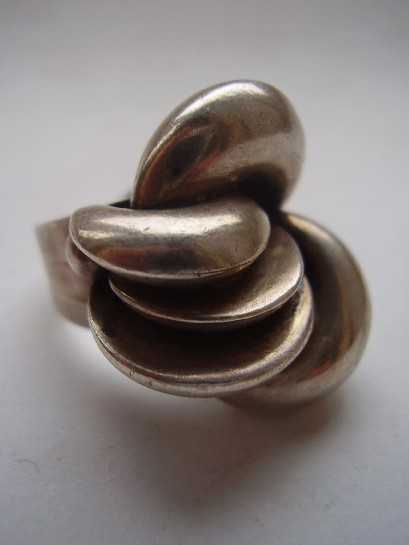
It’s easy to tell the story of mid-century modernist jewellery as a purely Scandinavian and North American phenomenon, Kupittaan Kulta, David Andersen, Rebajes, and stop there. Antonio Belgiorno’s work is a useful corrective. Working out of Argentina, Belgiorno was part of a genuine, independent Latin American modernist silver tradition, one that shared the same broad instincts, clean structural form, honest material, minimal ornament, while developing its own visual identity in parallel rather than simply copying the European movement.
This ring shows exactly that: recognisably modernist in its restraint, but with a weight and proportion that reads differently from a Scandinavian equivalent. Mid-century Argentine and broader Latin American silver design doesn’t get anywhere near the market attention of its Nordic counterpart, which makes it one of the more genuinely undervalued corners of the whole movement for anyone actually paying attention rather than following the well-trodden names.
Why this matters beyond one ring. Modernism in jewellery wasn’t a single European export that the rest of the world imitated, it developed as something closer to a set of parallel, independently arrived-at responses to the same postwar shift away from ornament. Mexico had its own strong tradition (Los Ballesteros, among others in this same collection), and Argentina had its own too. Belgiorno is a genuine part of that story, not a footnote to it.
What to look for. A clean, legible maker’s stamp and silver that shows honest wear at the high points of the design rather than a uniformly polished surface, exactly what you’d expect from a piece that’s actually been worn rather than sitting in a drawer.
This piece has since sold. It was part of a small, genuinely personal collection of mid-century and antique jewellery, gathered over years rather than acquired for resale. See the Antonio Belgiorno ring on Gozotiques.