
Or: the decoration that has to be right the first time, every time
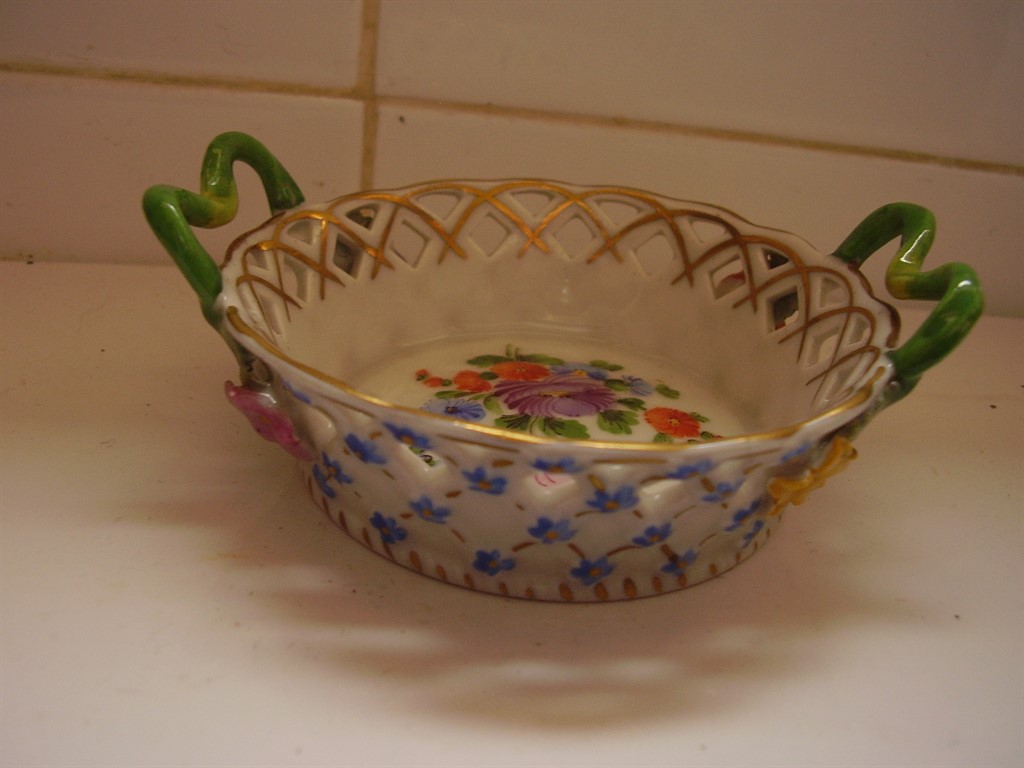
Lattice work, sometimes called reticulated porcelain, is one of the genuinely hardest techniques in ceramic decoration: the piece is pierced through in a repeating pattern before firing, meaning a single misjudged cut or an uneven kiln temperature can destroy hours of work in an instant. This small dish, with its green handles, gilding, and applied flowers and forget-me-nots, represents exactly that combination of technical risk and decorative confidence that Dresden porcelain built its reputation on.
Dresden, alongside nearby Meissen, became one of the defining names in European porcelain from the 18th century onward, and pieces like this, combining pierced latticework with hand-applied floral decoration and gilt detailing, represent the tradition at its most technically ambitious. Every element here, the lattice, the applied flowers, the gilding, had to survive the same firing without a single failure.
Why this piece is a genuine outlier in this collection. Almost everything else here is metalwork, silver, bronze, copper. Porcelain survives by an entirely different logic, it can’t be reshaped or repaired the way metal can, which makes a piece this delicate surviving intact, with its pierced lattice unbroken, a meaningfully rarer thing than an equivalent silver piece surviving the same span of time.
What to look for. Every pierced opening in the lattice should be intact with no hairline cracks radiating from the cuts, the single most common failure point on pieces like this. This dish’s lattice is fully sound.
This piece is part of a small, genuinely personal collection of antiques, gathered over years rather than acquired for resale. See the Dresden lattice dish on Gozotiques.