A Gebrüder Falk Art Nouveau Silver and Ruby Lizard Brooch: The Movement’s Favourite Reptile

Or: why lizards turn up constantly in Art Nouveau jewellery once you start looking

Alongside the insects, dragonflies especially, that define so much Art Nouveau jewellery, the lizard was another recurring subject the movement kept returning to. Its sinuous, curving body suited the era’s obsession with organic, flowing line better than almost any other creature available, a single lizard’s form could carry the whole visual vocabulary of the style in one continuous shape. This brooch, by the German house Gebrüder Falk, set with ruby accents, is a strong example of exactly that.

Gebrüder Falk, working in the same broad German Art Nouveau tradition as the guard chain elsewhere in this collection, brings the same combination this collection keeps returning to: precious material, silver and genuine ruby, handled with the movement’s naturalist sensibility rather than traditional formal jewellery’s more rigid symmetry. The lizard’s form curves and flows the way the era’s poster art and glasswork did too, the same visual language across entirely different media.

Why the lizard motif specifically rewarded a skilled silversmith. Unlike a symmetrical floral motif, a convincing lizard has to read correctly from every angle while still following the body’s actual anatomy, no cheating the proportions to make the metalwork easier. Getting both the naturalism and the flowing Art Nouveau line right simultaneously took real skill.

What to look for. The ruby settings should be secure and the silverwork’s line should read as a genuine, anatomically plausible lizard rather than an abstracted squiggle, both true of this piece.

This piece is part of a small, genuinely personal collection of antique jewellery, gathered over years rather than acquired for resale. See the Gebrüder Falk lizard brooch on Gozotiques.

[Image pending, to be added once source photo is confirmed.]
A Dresden Lattice Work Dish: Porcelain’s Most Demanding Technique

Or: the decoration that has to be right the first time, every time

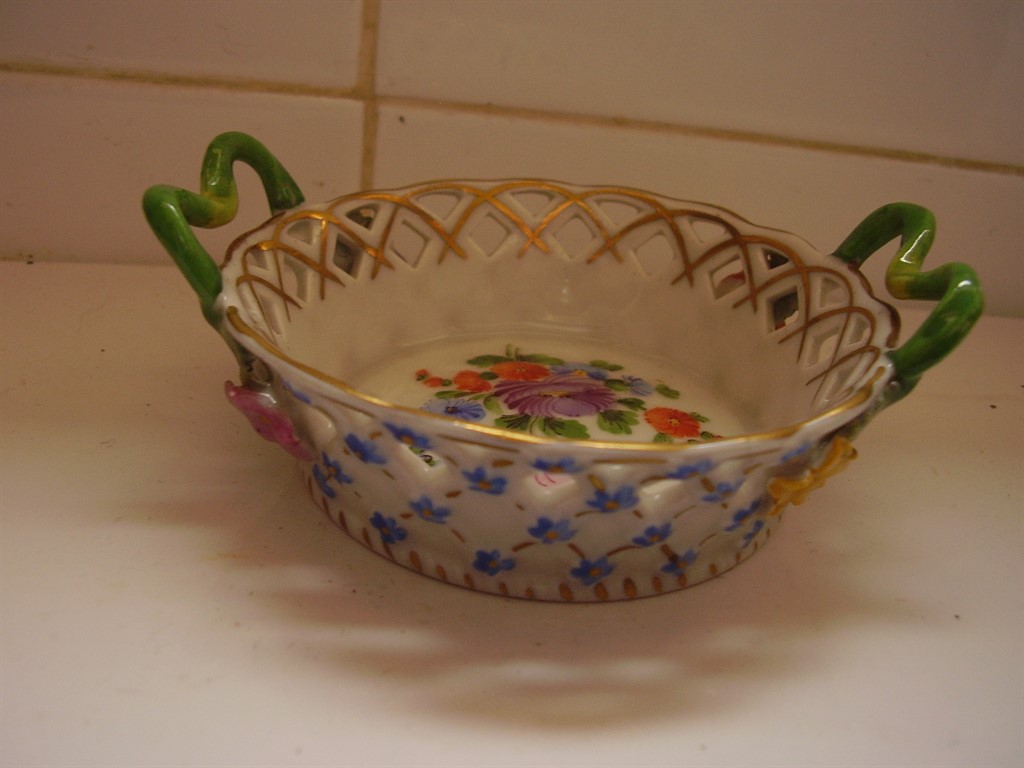
Dresden Lattice Work Dish

Lattice work, sometimes called reticulated porcelain, is one of the genuinely hardest techniques in ceramic decoration: the piece is pierced through in a repeating pattern before firing, meaning a single misjudged cut or an uneven kiln temperature can destroy hours of work in an instant. This small dish, with its green handles, gilding, and applied flowers and forget-me-nots, represents exactly that combination of technical risk and decorative confidence that Dresden porcelain built its reputation on.

Dresden, alongside nearby Meissen, became one of the defining names in European porcelain from the 18th century onward, and pieces like this, combining pierced latticework with hand-applied floral decoration and gilt detailing, represent the tradition at its most technically ambitious. Every element here, the lattice, the applied flowers, the gilding, had to survive the same firing without a single failure.

Why this piece is a genuine outlier in this collection. Almost everything else here is metalwork, silver, bronze, copper. Porcelain survives by an entirely different logic, it can’t be reshaped or repaired the way metal can, which makes a piece this delicate surviving intact, with its pierced lattice unbroken, a meaningfully rarer thing than an equivalent silver piece surviving the same span of time.

What to look for. Every pierced opening in the lattice should be intact with no hairline cracks radiating from the cuts, the single most common failure point on pieces like this. This dish’s lattice is fully sound.

This piece is part of a small, genuinely personal collection of antiques, gathered over years rather than acquired for resale. See the Dresden lattice dish on Gozotiques.

A German Modernist Silver and Amethyst Ring: The Bauhaus Instinct in Miniature

Or: Germany had its own answer to Scandinavian restraint

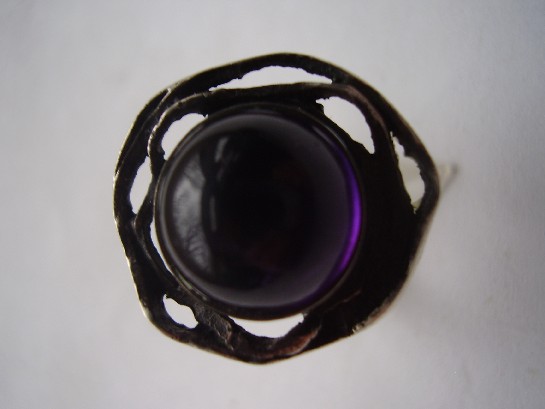
German Modernist silver and amethyst ring

Scandinavian names tend to dominate any conversation about mid-century modernist jewellery, but Germany’s own postwar design culture, shaped heavily by the Bauhaus legacy a generation earlier, produced a genuinely parallel tradition. Function over ornament, structure over decoration, honest material over illusion, the same design commandments, arrived at independently through a different national design history.

This ring shows that lineage clearly: a substantial amethyst held in silverwork that prioritises clean geometric structure over elaborate setting. It’s recognisably part of the same broad mid-century movement as the Scandinavian pieces elsewhere in this collection, while carrying a slightly different design accent, marginally more architectural, less organic, consistent with German design’s own particular inheritance from Bauhaus functionalism.

Why the Bauhaus connection matters here. The Bauhaus movement formally ended in 1933, but its core design principles, strip away ornament, let function and material dictate form, didn’t disappear with it. They resurfaced across German craft and product design for decades afterward, jewellery included. A ring like this carries that inheritance whether or not its maker ever set foot in the original school.

What to look for. The amethyst should be securely and cleanly set within the geometric silverwork, with no gaps or crude soldering visible, exactly what separates genuine period craftsmanship from a rougher reproduction. This one is cleanly made.

This piece has since sold. It was part of a small, genuinely personal collection of mid-century and antique jewellery, gathered over years rather than acquired for resale. See the German Modernist ring on Gozotiques.

A German Art Nouveau Guard Chain: Maidens, Rubies, and the End of the 19th Century

Or: the last gasp of Victorian symbolism before the world went modern

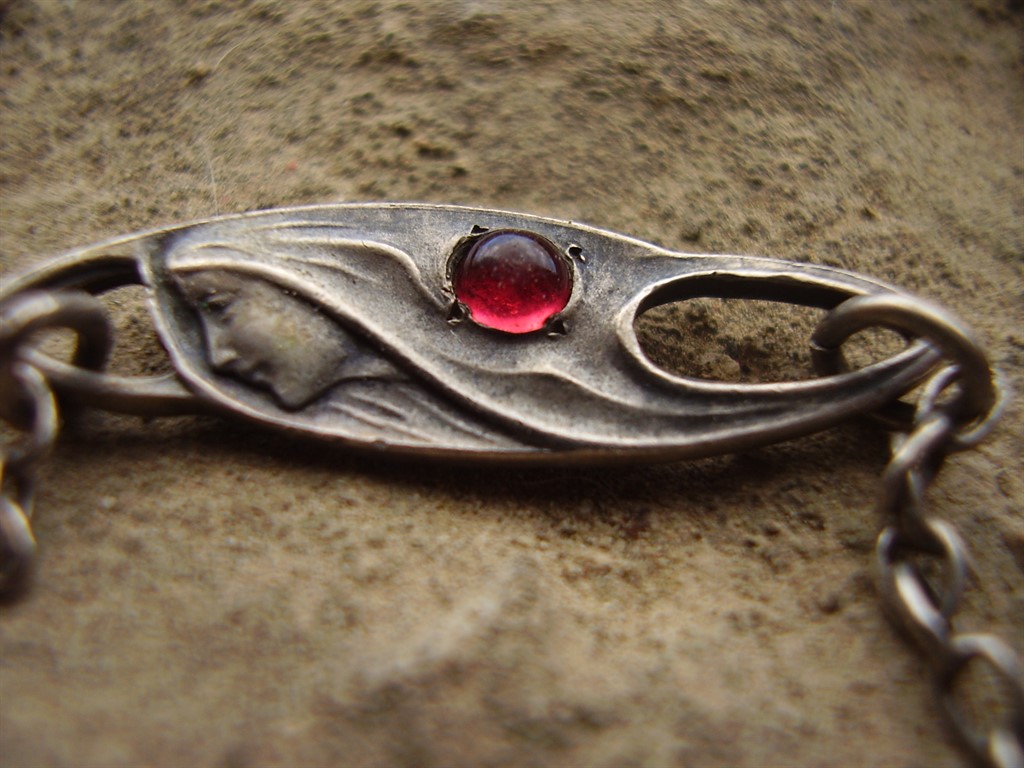
German silver and ruby Art Nouveau guard chain or necklace depicting maidens' heads

Art Nouveau jewellery sits at an odd hinge point in design history. It’s reacting against the heavy, mass-produced Victorian jewellery that came before it, reaching instead for flowing natural forms, maidens, flora, insects, but it’s still working in precious metal and stone, still fundamentally a luxury craft. This German silver and ruby guard chain, depicting maidens’ heads, sits right at that hinge, ornate enough to be unmistakably late 19th century, but already reaching for the organic, figurative style that would define the movement.

A guard chain, worth explaining for anyone who hasn’t handled one, was originally functional: a secondary chain attached to a pocket watch, worn as insurance against losing the watch itself, often doubling as a necklace or fastened across a bodice. By the late 19th century they’d become a genuine display piece in their own right, sometimes more elaborate than the watch they were nominally guarding.

Why the maiden motif, specifically. Figurative female faces, often stylised or half-abstracted into the metalwork itself, were one of Art Nouveau’s most recognisable signatures, echoing the same visual language found in the movement’s posters and glasswork. Finding it rendered this precisely in silver, rather than the more common base-metal costume pieces of the era, marks this as a genuinely well-made example rather than mass production.

What to look for. The ruby accents are set, not glued, and the facial detailing on the maidens’ heads is crisp rather than worn to a blur, both signs this has been kept properly rather than knocking around a drawer for a century.

This piece is part of a small, genuinely personal collection of antique jewellery, gathered over years rather than acquired for resale. See the German Art Nouveau guard chain on Gozotiques.