
Or: the animal bronzes that made Vienna famous for something other than music
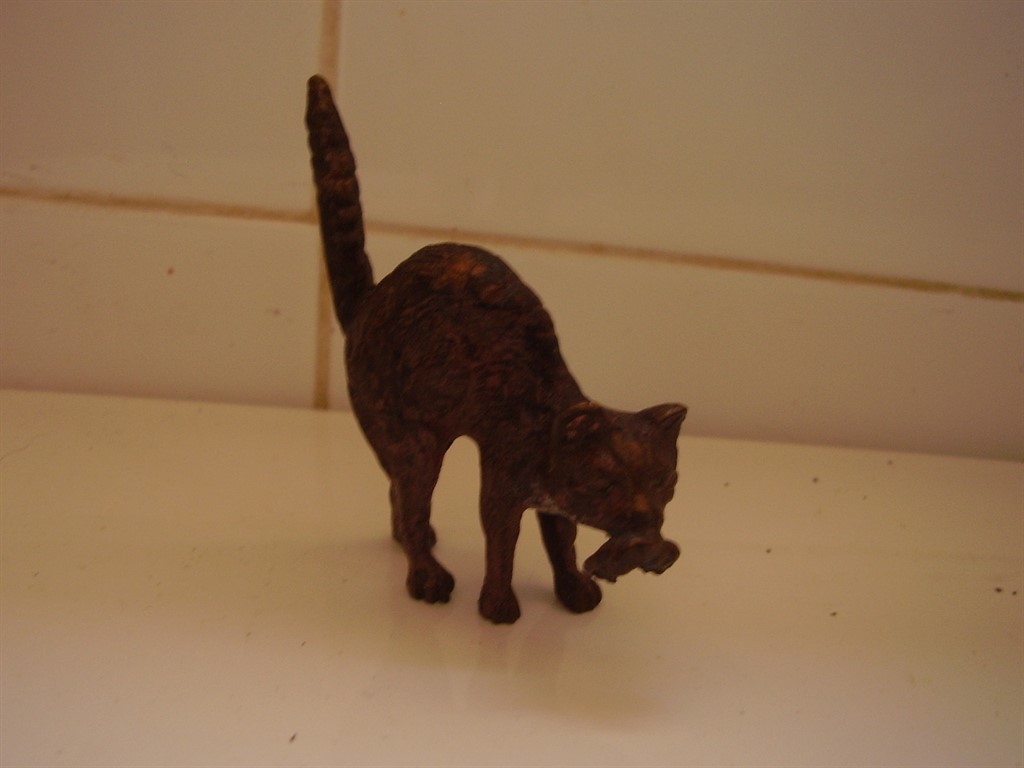
Vienna’s cold-painted bronze tradition, sometimes called Austrian bronzes, flourished from the mid-19th century onward, small cast animal figures finished with hand-applied cold enamel paint rather than fired glaze, giving them a level of realistic colour detail that traditional patinated bronze couldn’t achieve. This piece, a cat with a mouse or rat caught in its jaws, stamped BERGM, sits squarely in that tradition: a small, sharply observed moment of animal behaviour rendered with real technical skill.
‘Cold-painted’ refers specifically to the technique, paint applied after casting and cooling, rather than any glaze fired onto the metal. This let Viennese workshops achieve genuinely naturalistic colouring, fur texture, eye detail, the specific tones of a real animal, in a way that plain patinated bronze simply couldn’t match. It’s a more fragile technique than it looks, the paint can wear or chip over a century of handling.
Why the subject matter matters. Vienna bronze workshops covered everything from birds to elephants, but predator-and-prey moments like this one were a genuine specialty, small, sharply observed slices of nature rather than generic decorative animals. Getting the anatomy and the moment convincing was the entire point.
What to look for. The cold paint should retain real colour and detail rather than being worn to bare bronze, and the BERGM stamp should be clearly legible, both hold up well on this piece.
This piece is part of a small, genuinely personal collection of antiques, gathered over years rather than acquired for resale. See the Austrian bronze cat on Gozotiques.