
Or: what happens when a country’s entire samurai-metalwork tradition needs a new market, fast
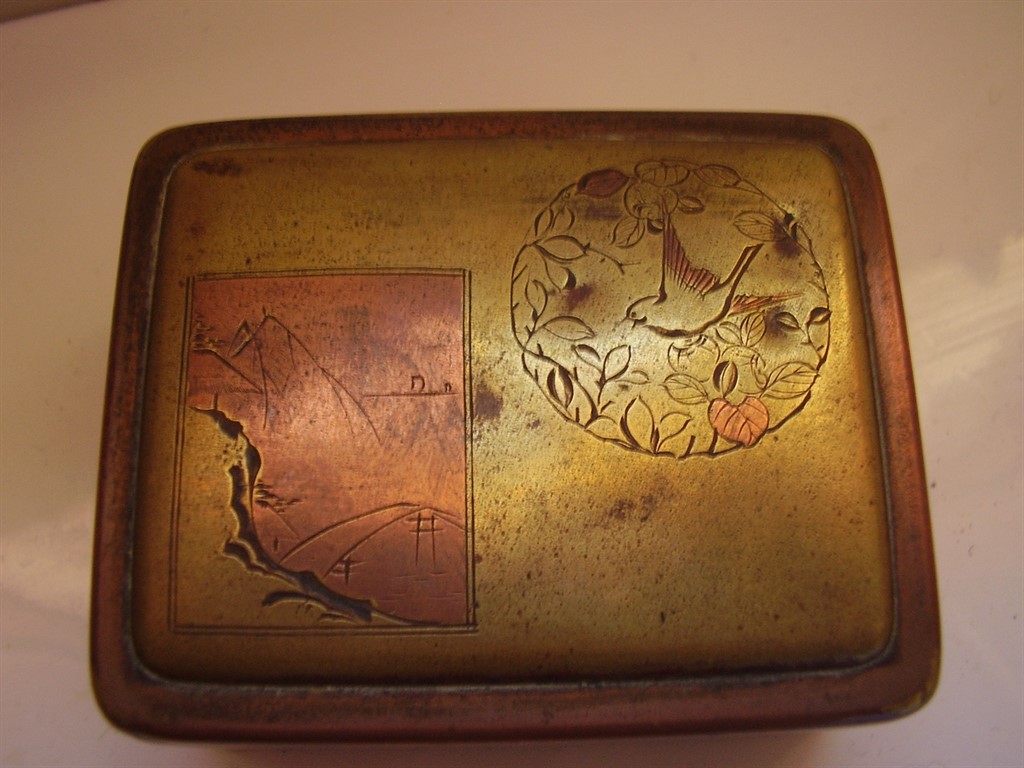
The Meiji period, starting in 1868, forced a strange transition on Japan’s metalworkers. Centuries of skill had gone into swords and armour fittings, and then, almost overnight, the samurai class that commissioned that work was formally dissolved. The craftsmen didn’t disappear. They redirected an extraordinary level of technical skill toward a new export market hungry for anything Japanese: boxes, vases, incense burners, small decorative objects built with the same mixed-metal techniques once reserved for weapons.
This small bronze and copper box, circa 1900, sits right in that tradition. The combination of bronze and copper in a single piece, rather than a single uniform metal, is a deliberate technique, layering different alloys to create contrast and depth, a direct descendant of the metalworking traditions used on sword fittings for generations before.
Why this matters for collectors. Meiji-era metalwork is genuinely undervalued relative to the skill involved, largely because it was made in real volume for export, so it doesn’t carry the rarity premium of, say, a genuine Edo-period sword fitting. That makes it one of the more accessible ways to actually own a piece of that craft tradition rather than just read about it.
What to look for. Genuine period pieces show real tool marks under close inspection, tiny irregularities from hand-chasing and hand-finishing, rather than the dead-flat uniformity of a cast reproduction. This box has exactly that kind of honest handwork.
This piece is part of a small, genuinely personal collection of antiques and collectables, gathered over years rather than acquired for resale. See the Japanese bronze and copper box on Gozotiques.