
Or: before there were fridge magnets, there was banded agate
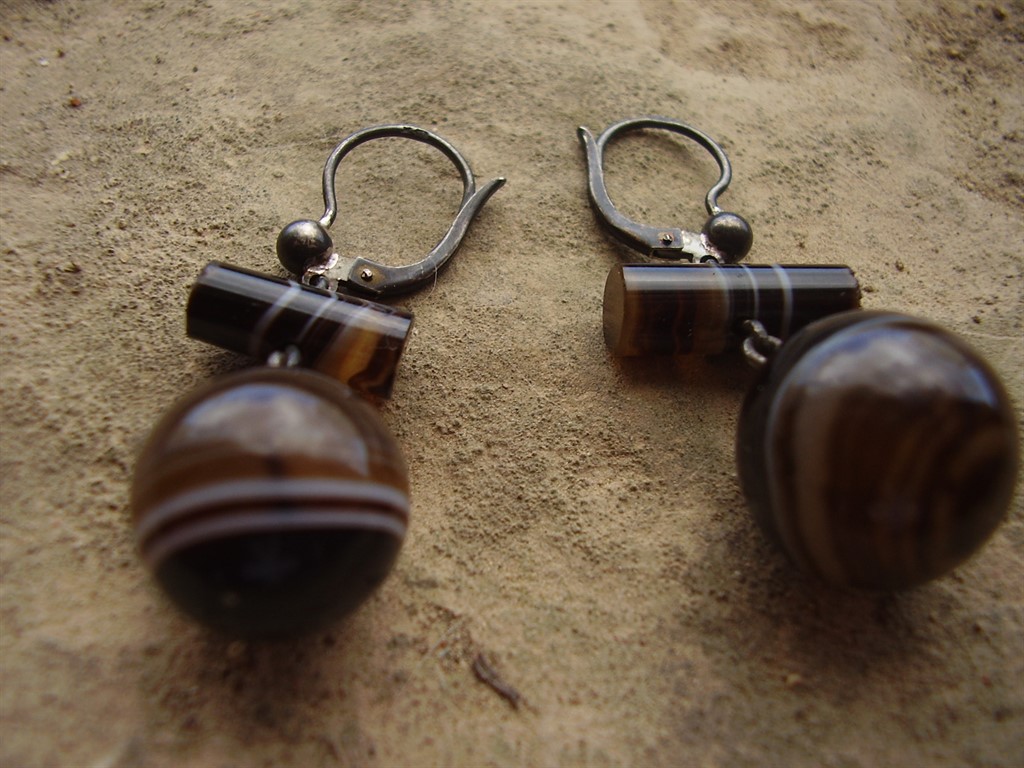
Scottish agate jewellery became genuinely fashionable in the Victorian era largely because of one person: Queen Victoria’s well-documented fondness for the Scottish Highlands turned Balmoral and the surrounding region into a must-visit destination for wealthy Victorians, and agate, abundant in Scottish rivers and hillsides, became the era’s defining souvenir material. These earrings, showing the mineral’s natural banding, are a genuine example of that specific 19th-century tourism phenomenon rendered in wearable form.
What makes Scottish agate jewellery distinct from agate work elsewhere is the setting style, typically simple, sturdy metalwork that lets the stone’s natural banding do all the visual work, a world away from the elaborate gemstone settings of formal Victorian jewellery. This was accessible luxury, not court jewellery, which is exactly what made it so popular.
Why a matching pair matters. Earrings are among the easiest pieces to separate over a century and a half, one lost, one kept, one sold on its own. A genuinely matched surviving pair, with consistent banding and identical settings, is meaningfully harder to find intact than a single Victorian agate brooch or ring would be.
What to look for. The banding pattern should be closely, though not perfectly, matched between the two stones, natural agate is never identical piece to piece, but a genuine period pair was selected by an eye for reasonable consistency. These two are a good match.
This piece has since sold. It was part of a small, genuinely personal collection of antique jewellery, gathered over years rather than acquired for resale. See the Victorian Scottish agate earrings on Gozotiques.