
Or: the workshop tradition that turned Taxco into a global silver capital
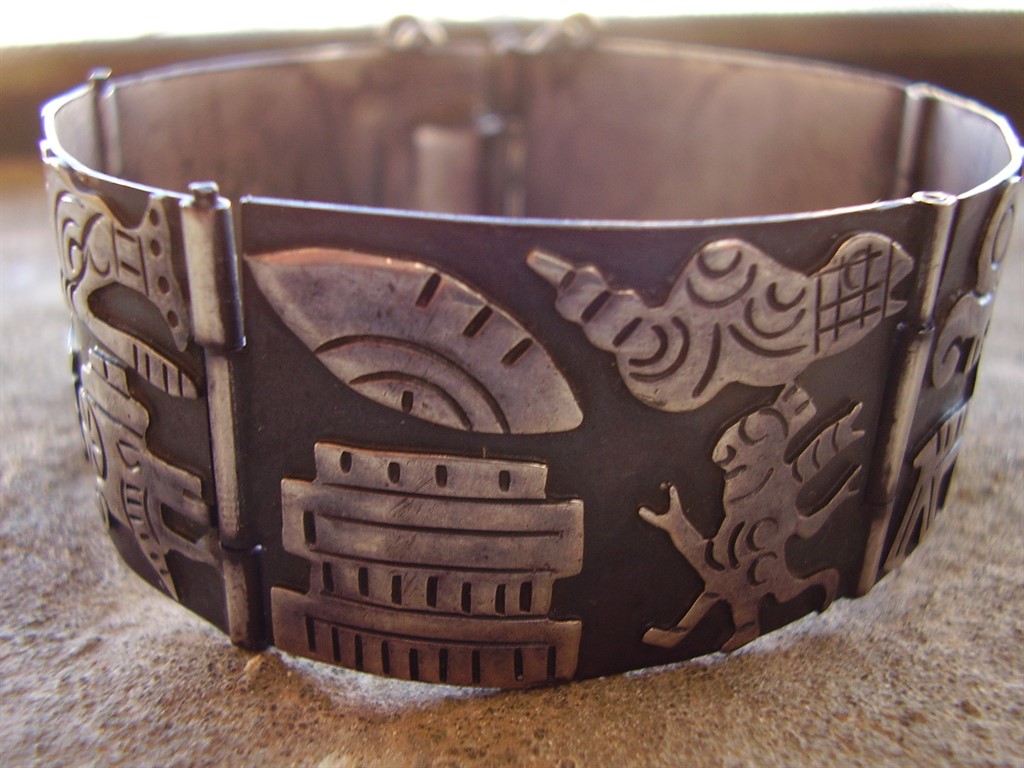
Los Ballesteros is part of the wider Taxco silver tradition, the Mexican town that became, almost by accident, one of the 20th century’s genuine centres of modernist silver design after William Spratling established his workshop there in the 1930s, training a generation of Mexican silversmiths who went on to found their own studios. This bracelet, in the storyteller style, narrative imagery worked directly into the silver’s surface, carries that lineage forward.
The storyteller form is distinct from the purely abstract modernist work elsewhere in this collection, figurative panels that read almost like a sequence, drawing on Mexican folk narrative traditions rather than European abstraction. It’s a genuinely different design language from the Scandinavian pieces in this collection while sharing the same underlying mid-century confidence in silver as a serious design medium.
Why Taxco’s story matters here. What happened in Taxco from the 1930s onward wasn’t one workshop’s success, it was the creation of an entire regional silver industry, dozens of workshops training under and then branching out from Spratling’s original studio. A piece like this represents that whole ecosystem, not an isolated maker working alone.
What to look for. The narrative panels should show crisp, legible detail, and the piece should carry both the maker’s mark and Mexican silver content stamps, standard for genuine Taxco-tradition work of this period. Both are present and clear here.
This piece is part of a small, genuinely personal collection of mid-century jewellery, gathered over years rather than acquired for resale. See the Los Ballesteros storyteller bracelet on Gozotiques.