Or: the movement that found beauty in things most jewellers ignored
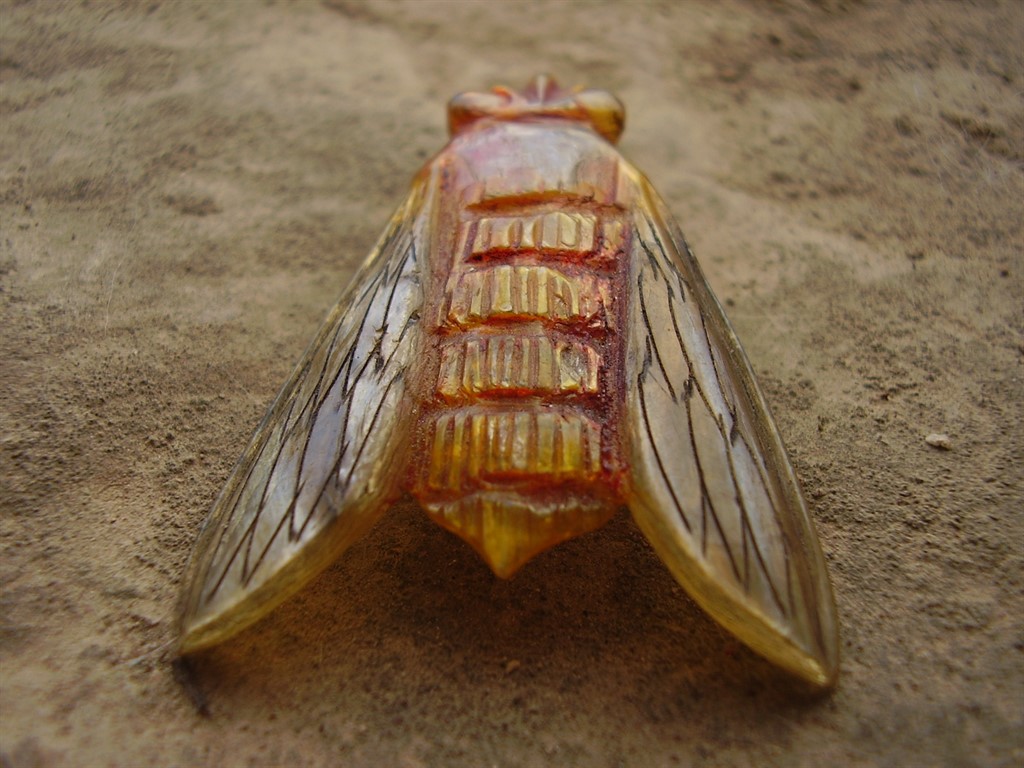
Art Nouveau’s obsession with insects, dragonflies, beetles, and here, a fly, wasn’t a novelty act. The movement’s core belief was that nature itself, studied closely rather than idealised, was the richest possible source of design, and insects offered structural and textural complexity that flowers alone couldn’t match. A fly is an odd choice by conventional Victorian standards, but entirely within Art Nouveau’s actual logic: study the form honestly, then render it beautifully.
Horn as a material matters here too. Carved and moulded horn became one of Art Nouveau’s signature materials specifically because it could be worked into translucent, organic forms that precious metal alone couldn’t achieve, closer in spirit to the material experimentation of Lalique’s glass work than to conventional jewellery-making. P. Lucas’s fly, rendered in horn, uses exactly that translucency to catch light the way an actual insect’s wings would.
Why an insect subject was a genuinely bold choice. Choosing a fly rather than a butterfly or dragonfly, both far more conventionally ‘pretty’ insect subjects, signals a maker genuinely committed to the movement’s naturalist philosophy rather than just borrowing its decorative vocabulary. This wasn’t the safe choice.
What to look for. The horn should show genuine natural translucency and grain rather than the uniform opacity of a later plastic imitation, and the maker’s mark should be clearly legible. Both hold up here.
This piece is part of a small, genuinely personal collection of antique jewellery, gathered over years rather than acquired for resale. See the French Art Nouveau horn fly brooch on Gozotiques.