
Or: when a designer’s name and a retailer’s name both end up on the same piece
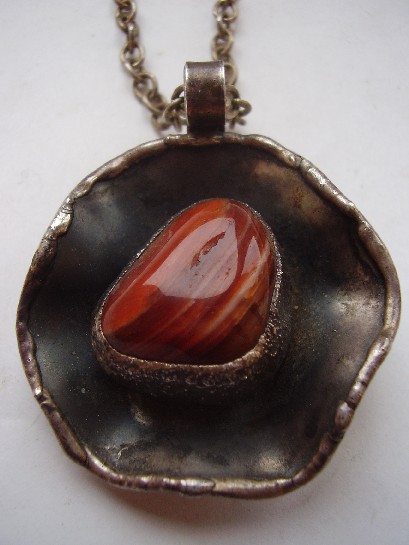
This pendant carries a double attribution: Erik Dennung as designer, Buch & Deichmann as the retail house that commissioned or sold it. That kind of pairing was common in mid-century Danish design, a working designer producing pieces under a retailer’s name or in direct collaboration with them, rather than every piece being sold purely under the maker’s own independent mark, the way Erik Dennung’s fossil and other solo-marked pieces elsewhere in this collection were.
It’s worth understanding this distinction, since it changes what you’re actually looking at. A solo-marked piece tells you the maker sold it directly under their own name. A piece like this tells you something about the wider commercial structure of Danish design retail at the time, working designers and established retail houses building pieces together, each lending the other credibility.
Why this matters for dating and provenance. A dual attribution like this is often easier to research than a purely independent workshop mark, since it ties the piece to a known retail house with its own records, not just a single maker’s output. That’s a real practical advantage for anyone trying to properly place a piece in its context.
What to look for. Both marks, designer and retailer, should be present and legible, exactly as they are here, a piece missing one or the other is worth a closer look before assuming the full attribution.
This piece has since sold. It was part of a small, genuinely personal collection of mid-century and antique jewellery, gathered over years rather than acquired for resale. See the Erik Dennung for Buch & Deichmann pendant on Gozotiques.