
A Yellow Nazeing Bowl: English Glassmaking’s Postwar Survivor

Or: the glassworks that kept British studio glass alive when almost nobody else did
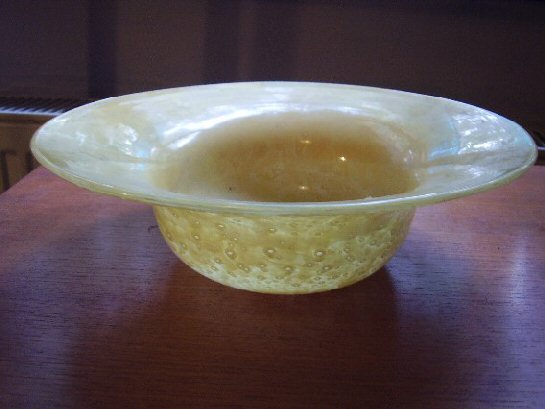
Yellow Nazeing Bowl

Nazeing Glass Works, founded in Essex in 1928, is one of the genuine survivors of British studio and decorative glass production through a century that wasn’t kind to the industry, two world wars, the steady decline of British manufacturing generally, and the rise of cheap imported glassware all took a toll on the wider trade. Nazeing kept producing through all of it, and this bowl, in a bold, saturated yellow, is a good example of the confident colour work that defined much of the firm’s output.

British decorative glass tends to get less international attention than Scandinavian or Venetian glassmaking, despite a genuinely continuous domestic tradition. Nazeing’s survival through the mid-20th century, adapting its output to changing tastes while staying recognisably a British maker, makes pieces like this a real, tangible piece of that under-told story.

Why colour intensity like this matters for dating and value. Achieving a bold, even yellow throughout a piece of blown glass is a genuine technical challenge, colour consistency depends on precise control of the glass batch and the working temperature throughout. An uneven or streaky colour usually signals either a lower-grade production run or a later, less careful imitation.

What to look for. The colour should be even throughout the piece with no visible streaking, and the glass itself should be free of the small internal bubbles that mark a rushed or lower-quality batch. This bowl shows clean, consistent colour.

This piece has since sold. It was part of a small, genuinely personal collection of antiques and collectables, gathered over years rather than acquired for resale. See the Yellow Nazeing bowl on Gozotiques.
A Silver and Enamel Suffragette Brooch, Circa 1900: Jewellery as Political Statement

Or: when wearing the wrong colour combination was itself a form of protest

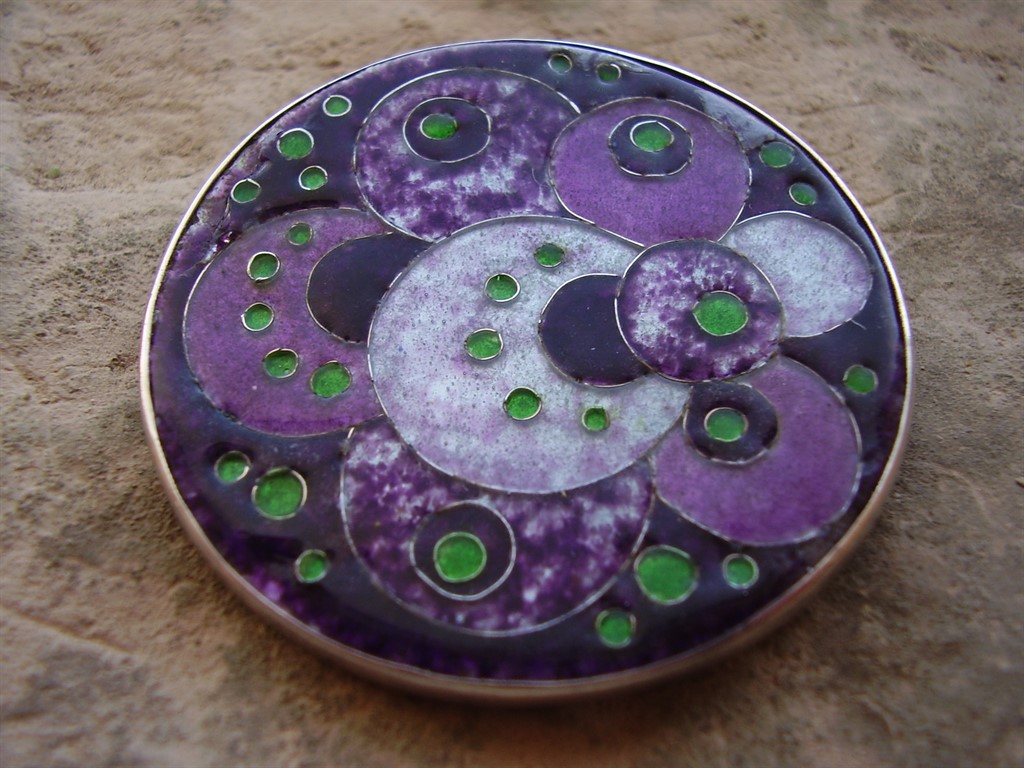
Silver and Enamel Arts and Crafts Suffragette Brooch

The Women’s Social and Political Union adopted purple, white, and green as its official colours in 1908, purple for dignity, white for purity, green for hope, and suffragette-sympathetic jewellers began producing pieces using exactly that palette almost immediately. This Arts and Crafts brooch, English, circa 1900, sits at the edge of that movement: silver and enamel work in the handmade, unpretentious style the Arts and Crafts movement favoured, a deliberate rejection of mass-produced Victorian jewellery in favour of visible, honest craftsmanship.

Arts and Crafts jewellery and the suffrage movement shared more than a historical moment, they shared an underlying philosophy: both were reactions against an establishment seen as ornamental, hollow, and resistant to genuine change. A woman choosing to wear a piece like this wasn’t just making an aesthetic choice, in the specific political climate of the period, it could be read as a visible, public statement.

Why this piece matters beyond its craftsmanship. Genuine suffrage-era jewellery is a real, if narrow, category of political and social history that happens to also be wearable. It sits at the intersection of design history and a specific, documented civil rights movement, which gives a piece like this a layer of significance that a purely decorative brooch from the same period wouldn’t carry.

What to look for. Hand-finished, slightly irregular enamel work and a visible hallmark consistent with the period, both present here, are what distinguish genuine Arts and Crafts pieces from later, more mechanically produced imitations of the style.

This piece is part of a small, genuinely personal collection of antique jewellery, gathered over years rather than acquired for resale. See the Suffragette brooch on Gozotiques.