
Or: postwar Swedish design still had room for a fairy tale
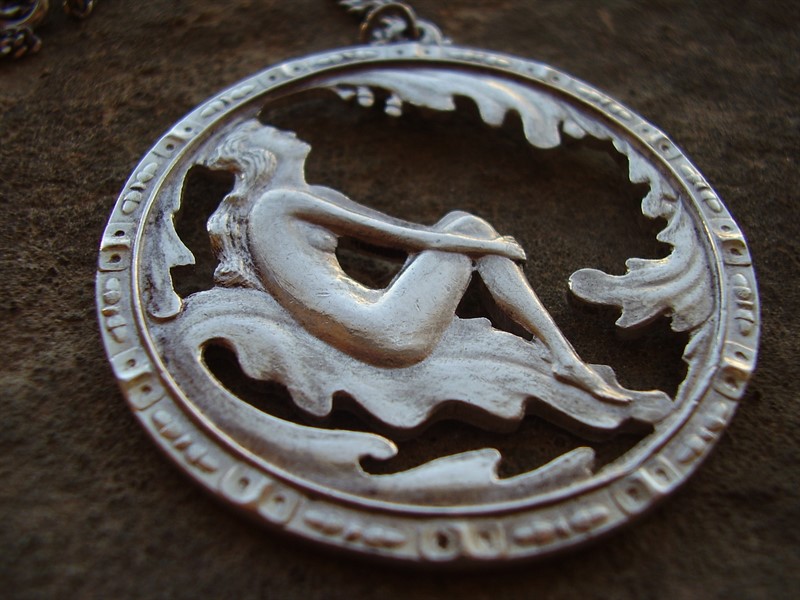
1948 sits right at the start of the clean, structural Scandinavian modernism that would come to define the region’s design reputation over the following two decades. This pendant is a useful reminder that the shift wasn’t instant or total: figurative, folkloric subjects, a maiden set within an oak tree, still had a real place in Swedish silverwork even as the wider design language was moving toward abstraction.
The maiden-in-a-tree motif draws on genuine Scandinavian folklore, tree spirits and forest maidens recur throughout Nordic legend, and rendering that subject in silver connects this piece to a much older craft tradition than the modernist silverwork elsewhere in this collection. It’s postwar in date but pre-modern in spirit, a bridge piece between two very different design instincts.
Why the date matters here specifically. A piece like this made a decade earlier would be unremarkable, folkloric silverwork was the norm. Made in 1948, right as Scandinavian modernism was beginning its ascent, it represents a genuine crossroads moment, craftsmanship looking backward toward legend even as the wider design culture around it was starting to look forward.
What to look for. The figurative detailing, the maiden’s form and the tree’s branches, should be crisp and legible rather than worn to a blur, and the 1948 date mark should be clearly struck. Both are intact on this piece.
This piece is part of a small, genuinely personal collection of antique jewellery, gathered over years rather than acquired for resale. See the Swedish maiden pendant on Gozotiques.