
Or: why the early 1970s might be the single best-documented moment in Finnish silver design
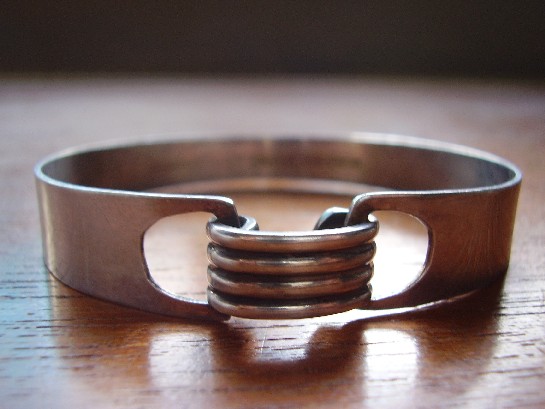
By 1972, when this bracelet was made, Finnish silver design had spent a solid two decades building the reputation that still defines it today. The Kupittaan Kulta workshops, Kalevala Koru, and independent makers like Erik Granit were all working from a shared, matured design vocabulary, structural silverwork, honest surfaces, forms that owed more to sculpture than to traditional ornament. This bracelet is a confident, fully realised example of exactly that moment.
A dated piece like this one is genuinely useful to a collector in a way an undated piece isn’t. Knowing it’s 1972 rather than a vague ‘mid-century’ places it precisely at the point where Finnish modernist silver had moved past its early experimental phase and into full maturity, the design confidence of a movement that knows exactly what it’s doing, not still working out what it wants to be.
Why independent makers matter alongside the famous workshops. Kupittaan Kulta gets most of the attention in any account of this period, deservedly, but the wider strength of Finnish design in the 1960s and 70s came from a genuinely broad base of makers working to a shared standard, not one workshop carrying the whole movement. Granit is part of that wider foundation.
What to look for. A clear date mark alongside the maker’s stamp, exactly as this piece has, is worth more to a collector than an undated piece from a more famous name, precision beats prestige when you’re actually trying to understand a design movement rather than just collect a signature.
This piece has since sold. It was part of a small, genuinely personal collection of mid-century and antique jewellery, gathered over years rather than acquired for resale. See the Erik Granit bracelet on Gozotiques.