
Or: the Danish name that never chased the spotlight the way Georg Jensen did
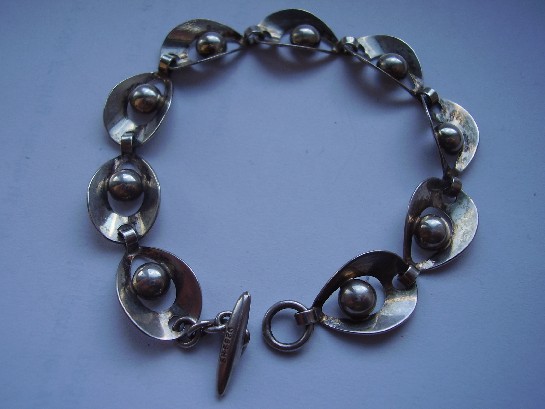
Ask most people to name a Danish silver house and they’ll say Georg Jensen, and stop there. Hermann Siersbol’s workshop, active through the mid-20th century, made pieces of comparable craftsmanship without ever building the same brand recognition outside Denmark. That’s actually useful for a collector: the workmanship is genuinely there, the international name premium mostly isn’t.
This bracelet shows the restrained, structural approach typical of Danish silver design in this period, weight and proportion doing the work, rather than surface decoration. It’s the same broad design language as its more famous countrymen, smooth forms, honest material, minimal embellishment, just from a workshop that stayed smaller and quieter.
Why smaller workshops matter to the wider story. Denmark’s mid-century silver reputation wasn’t built by one firm alone. It came from a whole ecosystem of workshops, some world-famous, many not, all working from broadly the same design principles. Siersbol pieces are a genuine, representative example of that wider movement, not an imitation of it.
What to look for. Danish silver from this period is reliably well-hallmarked, so a clear, legible mark and consistent silver content are the first things worth checking, and both are present here.
This piece has since sold. It was part of a small, genuinely personal collection of mid-century and antique jewellery, gathered over years rather than acquired for resale. See the Hermann Siersbol bracelet on Gozotiques.