A German Art Nouveau Guard Chain: Maidens, Rubies, and the End of the 19th Century

Or: the last gasp of Victorian symbolism before the world went modern
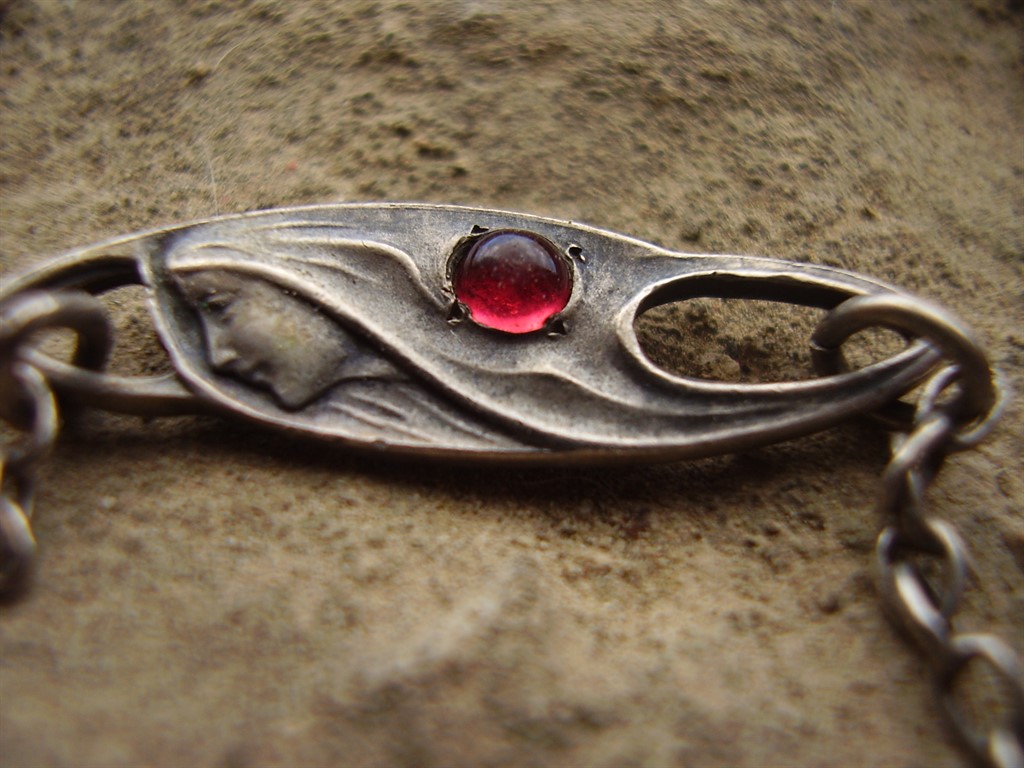
German silver and ruby Art Nouveau guard chain or necklace depicting maidens' heads

Art Nouveau jewellery sits at an odd hinge point in design history. It’s reacting against the heavy, mass-produced Victorian jewellery that came before it, reaching instead for flowing natural forms, maidens, flora, insects, but it’s still working in precious metal and stone, still fundamentally a luxury craft. This German silver and ruby guard chain, depicting maidens’ heads, sits right at that hinge, ornate enough to be unmistakably late 19th century, but already reaching for the organic, figurative style that would define the movement.

A guard chain, worth explaining for anyone who hasn’t handled one, was originally functional: a secondary chain attached to a pocket watch, worn as insurance against losing the watch itself, often doubling as a necklace or fastened across a bodice. By the late 19th century they’d become a genuine display piece in their own right, sometimes more elaborate than the watch they were nominally guarding.

Why the maiden motif, specifically. Figurative female faces, often stylised or half-abstracted into the metalwork itself, were one of Art Nouveau’s most recognisable signatures, echoing the same visual language found in the movement’s posters and glasswork. Finding it rendered this precisely in silver, rather than the more common base-metal costume pieces of the era, marks this as a genuinely well-made example rather than mass production.

What to look for. The ruby accents are set, not glued, and the facial detailing on the maidens’ heads is crisp rather than worn to a blur, both signs this has been kept properly rather than knocking around a drawer for a century.

This piece is part of a small, genuinely personal collection of antique jewellery, gathered over years rather than acquired for resale. See the German Art Nouveau guard chain on Gozotiques.
A Meiji-Era Bronze and Copper Box: Japan’s Golden Age of Metalwork

Or: what happens when a country’s entire samurai-metalwork tradition needs a new market, fast

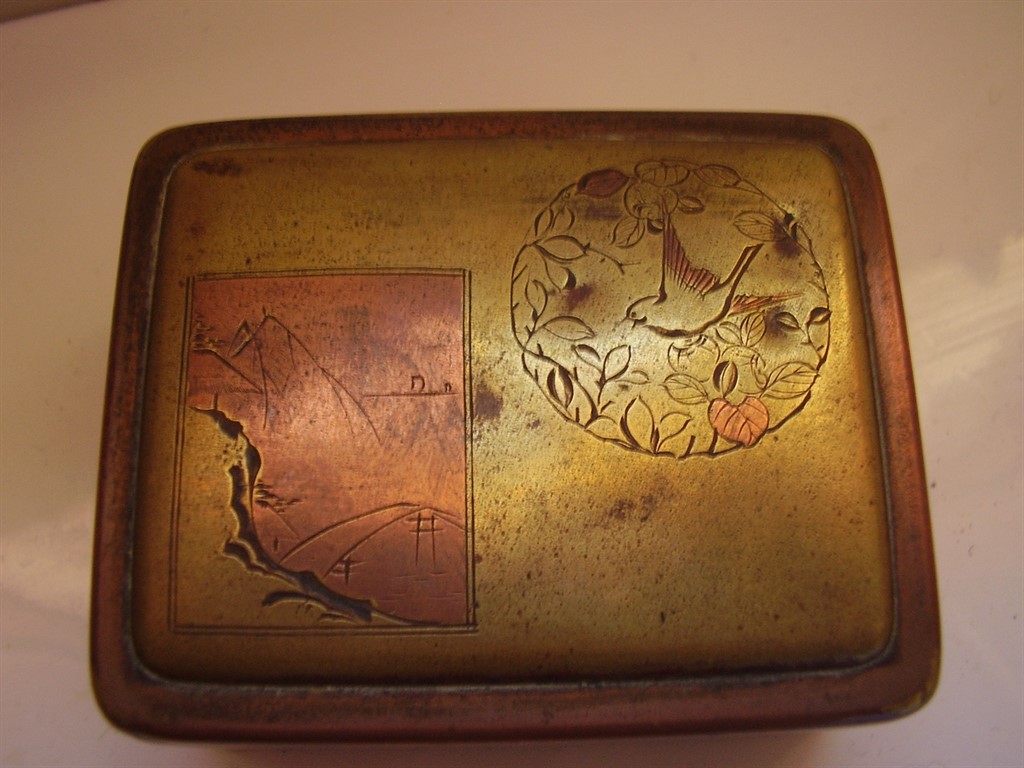
Rare Japanese bronze and copper snuff or trinket box circa 1900

The Meiji period, starting in 1868, forced a strange transition on Japan’s metalworkers. Centuries of skill had gone into swords and armour fittings, and then, almost overnight, the samurai class that commissioned that work was formally dissolved. The craftsmen didn’t disappear. They redirected an extraordinary level of technical skill toward a new export market hungry for anything Japanese: boxes, vases, incense burners, small decorative objects built with the same mixed-metal techniques once reserved for weapons.

This small bronze and copper box, circa 1900, sits right in that tradition. The combination of bronze and copper in a single piece, rather than a single uniform metal, is a deliberate technique, layering different alloys to create contrast and depth, a direct descendant of the metalworking traditions used on sword fittings for generations before.

Why this matters for collectors. Meiji-era metalwork is genuinely undervalued relative to the skill involved, largely because it was made in real volume for export, so it doesn’t carry the rarity premium of, say, a genuine Edo-period sword fitting. That makes it one of the more accessible ways to actually own a piece of that craft tradition rather than just read about it.

What to look for. Genuine period pieces show real tool marks under close inspection, tiny irregularities from hand-chasing and hand-finishing, rather than the dead-flat uniformity of a cast reproduction. This box has exactly that kind of honest handwork.

This piece is part of a small, genuinely personal collection of antiques and collectables, gathered over years rather than acquired for resale. See the Japanese bronze and copper box on Gozotiques.

Elis Kauppi’s Kinetic Amethyst Pendant: Finnish Modernism That Actually Moves

Or: the Finnish goldsmith who put jewellery in motion

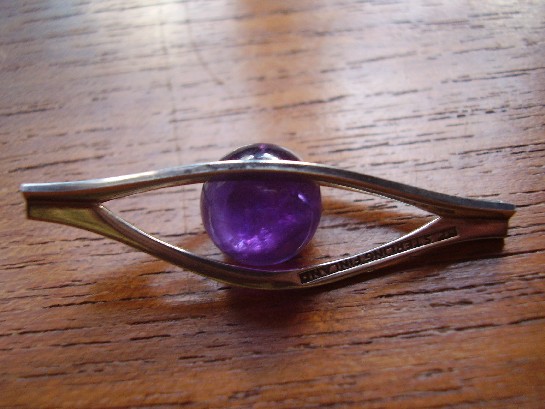
Kupittaan Kulta Elis Kauppi Kinetic Amethyst Eye of Horus Pendant

Most jewellery sits still. Elis Kauppi’s didn’t. Founder of Kupittaan Kulta in Turku, Finland, Kauppi became one of the defining names in Scandinavian modernist silverwork through the 1950s and 60s, and one of his signatures was kinetic construction, pieces with parts that genuinely swing, rotate, or shift as the wearer moves, rather than sitting as fixed ornament.

This pendant, worked around an amethyst cabochon, carries that same restless quality. Scandinavian modernism of this period was reacting hard against ornate, traditional goldsmithing, favouring clean structural forms and a real relationship between metal and stone rather than the stone simply being mounted onto it. Kauppi’s kinetic pieces push that a step further: the design isn’t finished until someone is actually wearing it.

Why Finland, specifically. Finnish silver design in this era had real international standing, part of the broader Scandinavian design wave that shaped how the whole world thought about modern jewellery, alongside Georg Jensen in Denmark and a handful of other studios. Kupittaan Kulta pieces from this period are genuinely collected, not just old stock.

What makes this one worth having. Kinetic elements are also the first thing to fail on a worn or poorly maintained piece, so a mechanism that still moves smoothly after this many decades says something real about how it’s been kept. This one still does exactly what Kauppi built it to do.

This piece has since sold. It was part of a small, genuinely personal collection of mid-century and antique jewellery, gathered over years rather than acquired for resale. See the Kupittaan Kulta pendant on Gozotiques.

The Frank Rebajes Copper Face Bracelet: Greenwich Village Modernism You Can Wear

Or: how a Dominican immigrant turned scrap copper into a design movement

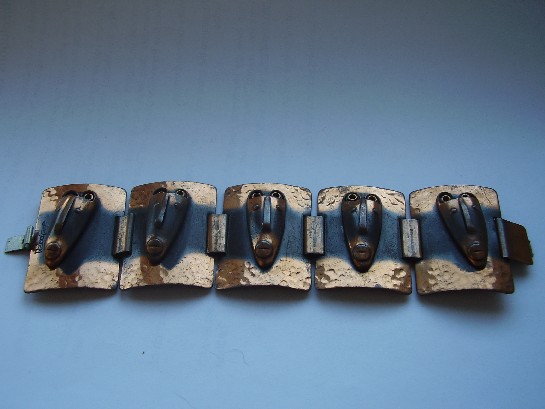
Frank Rebajes Copper Face Bracelet 1950's

In the 1930s, Frank Rebajes arrived in New York from the Dominican Republic with almost nothing, and started hand-forming copper jewellery on the street. By the 1950s, his Greenwich Village studio was one of the best-known names in American modernist metalwork, copper and brass pieces sold everywhere from his own shop to major department stores, worn by people who wanted something that looked nothing like traditional fine jewellery.

This bracelet is a good example of exactly what made his work distinctive. Five stylised faces, hammered and patinated copper, linked into a single articulated band. It’s not trying to be subtle. Rebajes’ whole design language ran on bold, abstracted forms rather than delicate detail, closer in spirit to the primitivist and folk-art influences popular in mid-century design than to anything from a traditional jeweller’s bench.

Why copper, specifically. Copper was cheap, workable by hand, and took a patina beautifully, all of which mattered to a designer building a business from nothing. It also meant Rebajes pieces were affordable enough to actually sell in volume, which is part of why they turn up reasonably often today, and part of why a genuine, well-preserved piece like this is still worth having: this was democratic design, made to be worn, not locked away.

What to look for. Genuine Rebajes pieces are usually stamped, and the patina should look earned rather than artificial, uneven, settled into the recesses of the hammering rather than a flat, uniform tone. This piece carries exactly that kind of honest age.

This piece has since sold. It was part of a small, genuinely personal collection of mid-century and antique jewellery, gathered over years rather than acquired for resale. See the Frank Rebajes Copper Face Bracelet on Gozotiques.